
Activities in 2019
This article is part of the Annual Report 2019
In 2019, the DDA organised a total of 12 PhD and postdoc courses and symposia, which attracted around 600 participants, mostly junior diabetes researchers (master students, PhD students and postdocs) from academia and hospitals in Denmark and abroad.
The 2019 Educational Activities and Talent Development programme included (i) a high variety of topics from transferable skills courses to more diabetes specific activities with incorporation of interdisciplinary research in many of the activities; (ii) a high rate of international speakers
* Activity where participants earn ECTS points
Table 2. The table shows the DDA Educational and Talent Development Activities 2019 including date, number of participants (n) and percentage of speakers from abroad (%)
(see Table 2); and (iii) the use of various learning and pedagogic approaches to deliver the activities. Overall, the activities achieved high satisfaction scores from participants (see Figure 4). Table 2 gives an overview of the DDA Educational Activities and Talent Development of 2019.
An example of the interdisciplinary approach included in the activities is the two-day symposium on Children, Adolescents & Emerging Adults with Type 1-Diabetes where the aim was to highlight how research and the clinic can interact to develop optimal treatments for children and adolescents with type 1-diabetes. As a new initiative, each session was structured with an up-to-date lecture on basic research e.g. pathophysiology and prevention of type 1-diabetes, followed by a talk about the challenges of clinical treatment and ending with a talk about the psychosocial aspects for individuals living with diabetes and seen from the parents’ perspective. This approach deepened the understanding of the challenges that each research area is facing and the potentials of interdisciplinary collaboration and research to understand, prevent and treat the disease.
An example of the successful inclusion of various learning methods in the activities was the DDA Winter School for Postdocs in Malaga, Spain. The five interactive days of this course for postdocs from Denmark and abroad included scientific lectures from national and international experts bridging fundamental discoveries and clinical relevance, discussions and workshops on career opportunities and poster and meet-the-professor sessions. A high focus was put on a structured networking activity where the participants discussed how to answer the tough questions people around the world are asking about research culture and developed creative solutions in an effort to strengthen the research community and advance the scientific understanding and future treatment of diabetes. A further description of this activity can be seen on page 26 –27
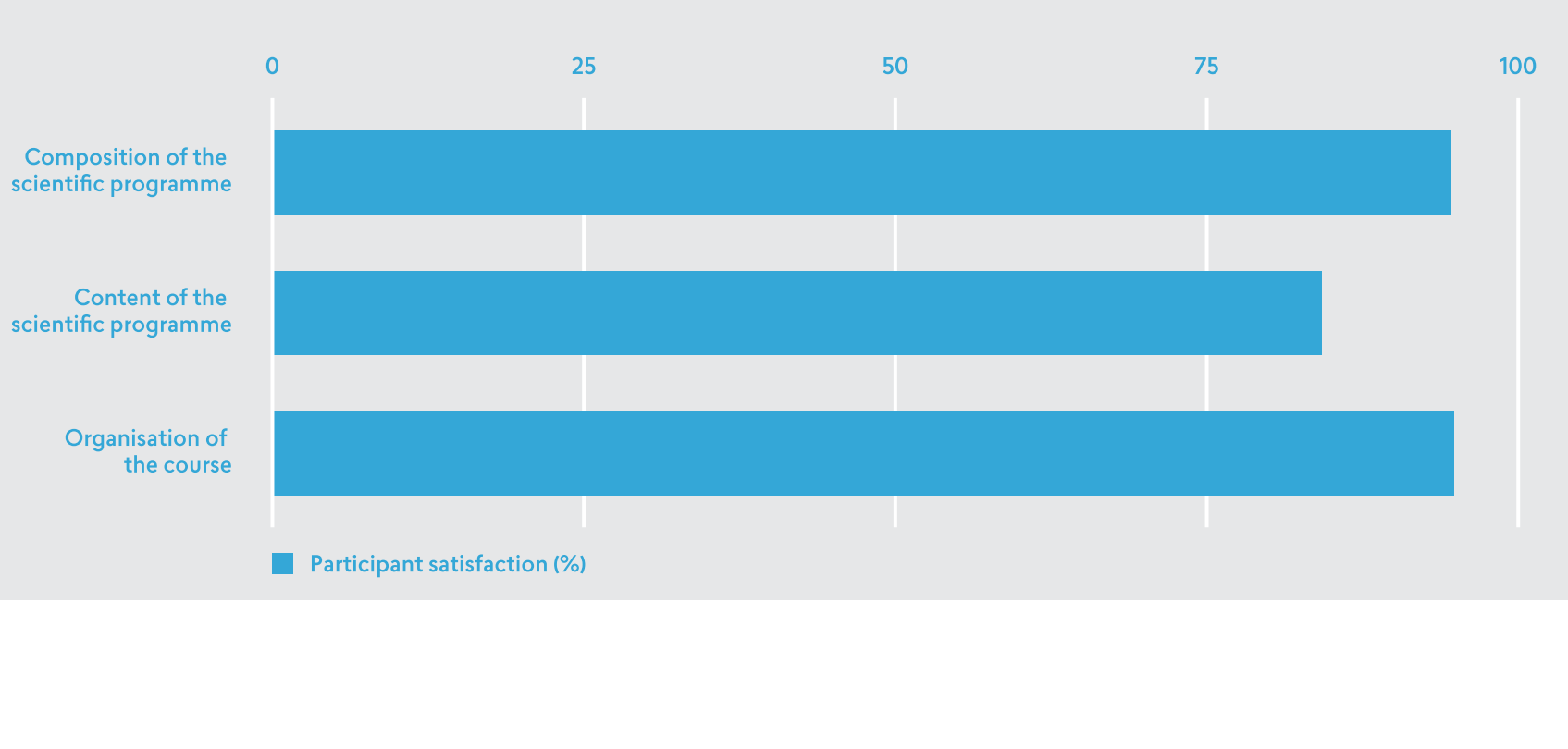
Figure 4. Participant average satisfaction (%) of the DDA Educational and Talent Development Activities 2019. The figure shows the percentage of participants stating in the participant evaluations that they were satisfied to a very great (5) or to a large extent (4) with the composition of the scientific programme, the content of the scientific programme and the organisation of the course, respectively, on a scale from 1 to 5 with 5 as highest score.