
Why Do Some Patients Develop Neuropathic Pain, But Not All? Schwann Cells May Be Part of The Answer

Xiaoli Hu’s field is diabetic polyneuropathy, one of the most common complications of diabetes, where patients suffer from various painful symptoms on the distal part of their limbs. Unfortunately, due to limited knowledge of the mechanisms behind neuropathic pain, the current treatment is still far from optimal.
"An interesting question to ask is why some patients with diabetes develop neuropathic pain, but others do not. What causes the pain?" Xiaoli Hu’s group at Aarhus University are trying to answer these questions by looking at a tiny skin biopsy from patients.
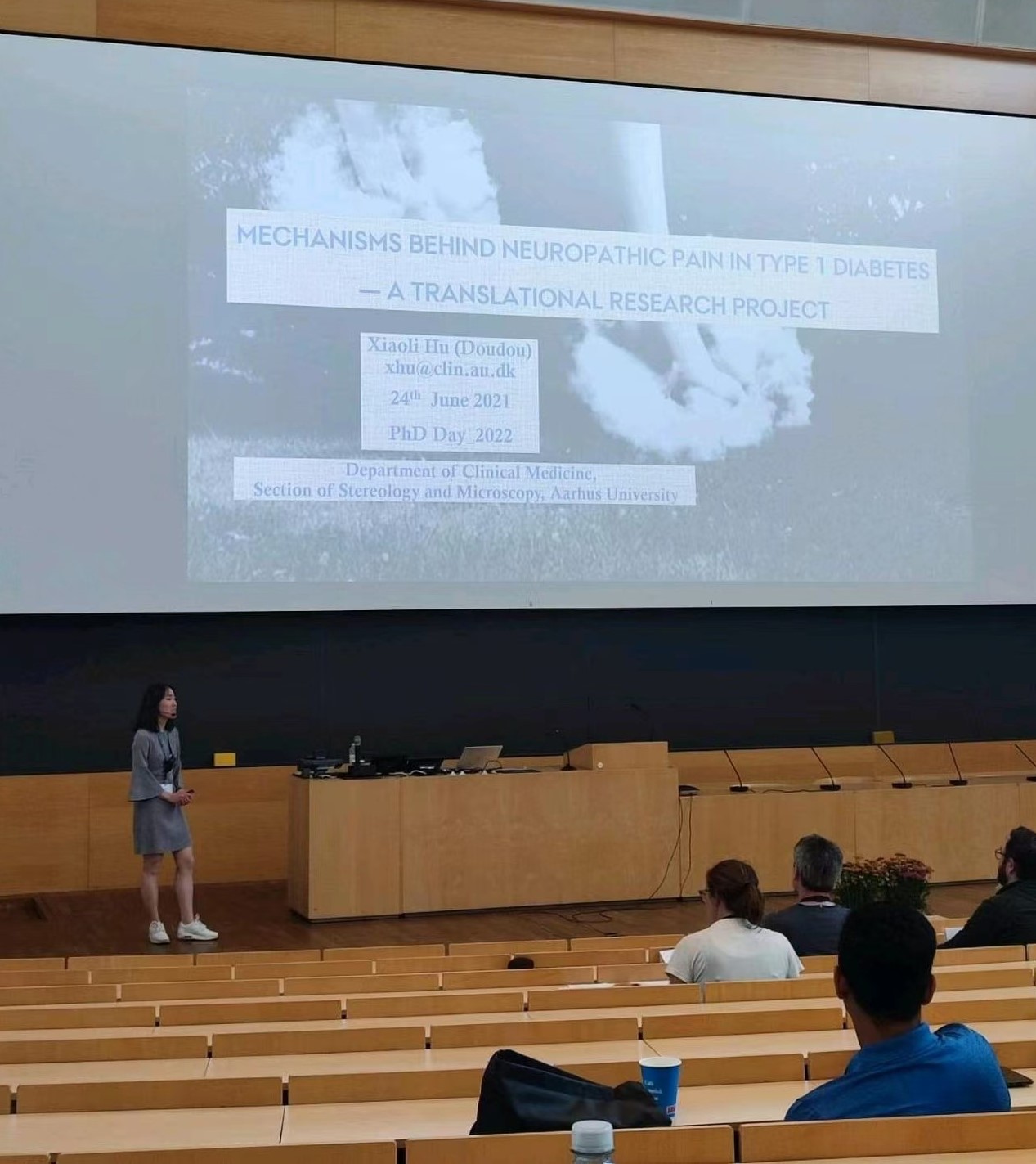 "We are looking to identify specific structural changes in skin that can explain why patients suffer from pain and – as a consequence – could be considered as potential treatment targets for diabetic neuropathic pain. So far, we have found promising biomarkers in our study. One finished preclinical project suggests that the expression of a special 'nerve fibre supporting cell' in skin, called the nociceptive Schwann cell, is related to the development of neuropathic pain in type 1 diabetic mice. We are now analysing Schwann cells and different types of inflammatory cells in patient skin biopsies. The final results will be released later this year after finishing the clinical analysis," says Xiaoli.
"It will be exciting to continue the research into why some people develop chronic neuropathic pain by conducting other novel methods in the future: for example, using spatial transcriptomics to understand molecular changes in cutaneous neurons and neighbouring skin cells would be a way to go," says Xiaoli Hu. She stresses that she is very grateful: she likes her job, and a plan has been made for her post-PhD life: she will continue her research efforts at the Danish Pain Research Center at Aarhus University Hospital. She is ready to pursue her research field further!
Read about some of Xiaoli Hu’s results here:
Some people experience pain. Others don't. And no one knows why – yet