
Tina Vilsbøll: deep in the engine room of EASD
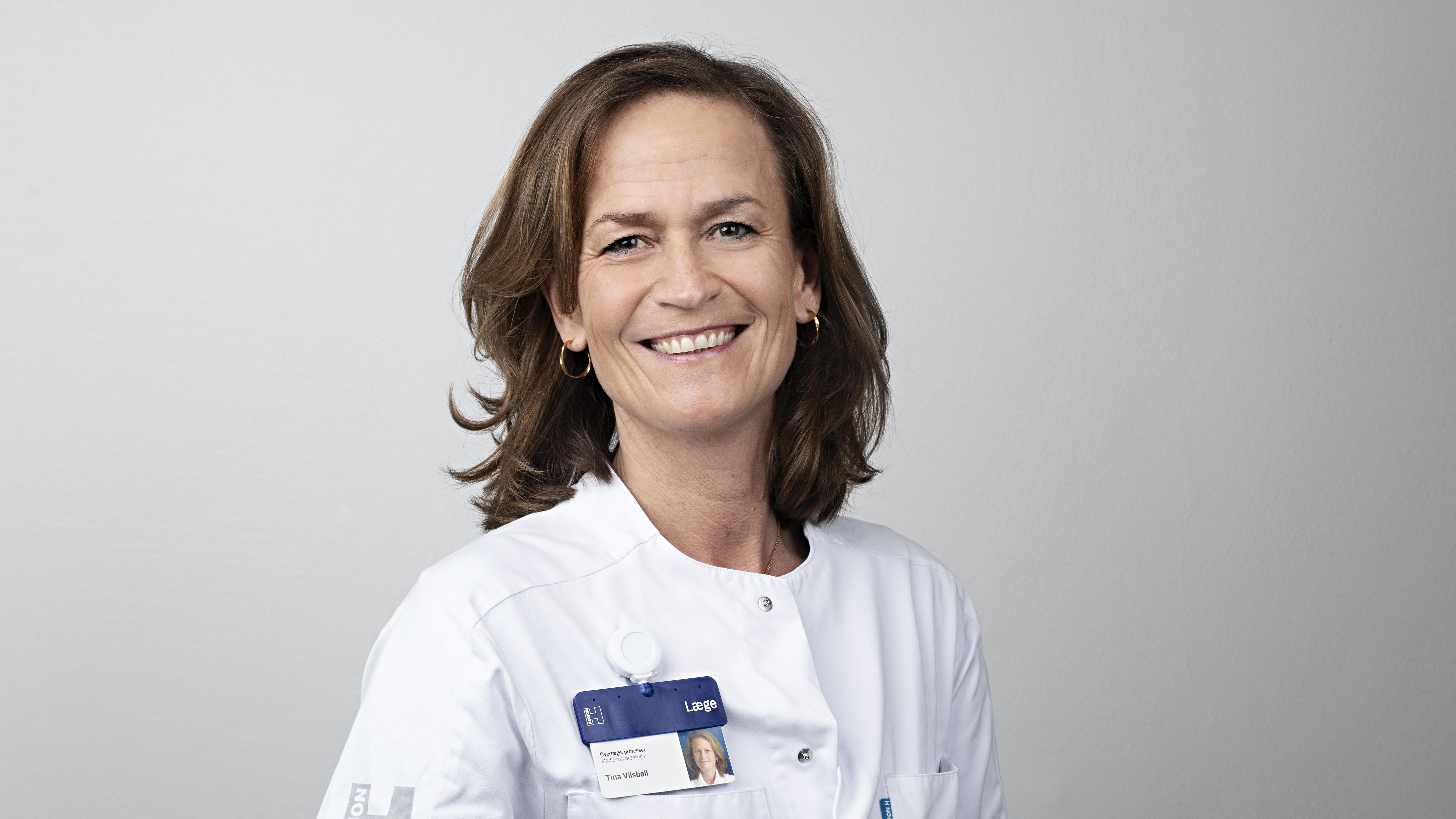
Professor Tina Vilsbøll has been involved both in planning this year’s EASD programme and in judging the abstracts sent in. Her advice to young researchers is to put serious effort into submitting clear, thoroughly prepared abstracts if they want to aspire to having an oral or poster presentation at the annual European diabetes congress.
It is not just anyone who gets to be chosen to take part in the programming of the annual meeting of the European Association for the Study of Diabetes (EASD), which this year is taking place in Barcelona from 16 to 20 September. Professor Tina Vilsbøll of the Steno Diabetes Center Copenhagen therefore also feels honoured to be invited for the second time to be on both the planning committee and the review committee that will assess the abstracts submitted.
‘It is of course an honour to be given the opportunity to help plan the scientific part of this big and very well-organized meeting. It confirms that someone out in the big wide world has noticed the work one does’, says Tina Vilsbøll, who was also on the committees 2 years ago and will be a member again in 2021.
She explains that members are invited to join the committee a year before the EASD meeting takes place. And, when you accept the invitation, you commit yourself to attending, first, a half-day meeting to discuss the broad outline (this takes place during EASD the previous year), and later a 3-day meeting near Düsseldorf, where the EASD is based. This meeting makes the final decision as to which presenters are to be invited and moves closer to a final programme.
‘The EASD is very well organized, and there is a basic template for most things, such as how many symposiums there should be and how long they should be. It is hard work, but it is also really nice, because you are working closely with exciting scientists you’ve known for many years from the diabetes community’, says Tina Vilsbøll.
1, 2, 3, many abstracts
Evaluating all the abstracts sent in by hopeful researchers wishing to present their research at EASD is a demanding task. Over 2,000 abstracts are submitted each year. First, they are rated by five external reviewers who mark them from 1 to 5; the abstracts are ranked by average score, and the organizing committee then makes the final decision as to which will be included and whether an abstract is to be presented as a talk or in poster form.
‘Reviewers have a month to examine the abstracts, which are grouped according to the scientific area they are submitted under (up to 500 abstracts). Abstracts are blinded for author and affiliation to prevent us being influenced by those. Actually, there is usually a very high degree of agreement among the many reviewers, which makes choosing the final abstracts easier, but the sheer number makes it a lengthy (but exciting) process’, says Tina Vilsbøll.
Finally, all the abstracts are put into subcategories, and a decision made on which will be presented as talks and which as posters.
‘Of course, the “hottest” thing for a researcher is to get an oral presentation at a major international diabetes congress, so you get to stand in front of a large audience and present your scientific findings. And it’s an indescribable pleasure to see our young, hopeful stars standing up there and getting what may be their first ‘fifteen minutes of fame’ on a major international platform. But, as the poster presentations at EASD also have chairmen, getting to present a poster is also a big thing and a challenge for many of them’, says Tina Vilsbøll.
Thoroughness pays off
Around 40% of all abstracts submitted are accepted, so there is competition to get the chance to present. Tina Vilsbøll therefore advises young researchers to be meticulous when preparing their abstracts.
‘This year, I have read between 400 and 450 abstracts, and I have to do that in a month – fitting it into an already busy routine. So, it isn’t hard to work out that there is not much time for each individual abstract. That means you need to prepare a well-written abstract in which the title, introduction and conclusion, in particular, are crystal clear. It is sloppy to send something off with things like spelling errors in it, as they raise doubts in reviewers’ minds and can mean that you risk being rejected at the long-listing stage. You may well have done great research, but, if you send in an error-ridden abstract, the reviewer may be concerned about the general quality of the data, so you risk your scientific work not being accepted for presentation’, she says.
Circulation studies still a hit
This year, big cardiovascular trials are again one of the popular topics at EASD. They are highly clinically relevant, which also fits in nicely with the fact that most researchers attending the meeting are clinicians.
Tina Vilsbøll herself very much enjoys coming to EASD, which traditionally attracts a lot of Danish diabetologists. The annual meeting is thus also an obvious opportunity to maintain and cultivate networks while also getting up to date on the latest science. The Danish professor will herself be busy with various meeting activities, but not too busy to make it to the presentation she is most looking forward to this year.
‘What I am most looking forward to this year is Filip Krag Knop receiving the Minkowski Prize and giving his presentation. He was my first PhD student, he is a close scientific colleague and a very close personal friend of mine, so I am delighted to see him getting well-deserved recognition for his great talent with this prize’, says Tina Vilsbøll.