
DDEA launches next year

by Mie Tomzak
The focus of the soon-to-be Danish Diabetes and Endocrine Academy is to bridge the research field of diabetes and the wider endocrinology fields, and ensure the highest quality of activities, building on the many years of experience behind the Danish Diabetes Academy.
Creating a strong community for scientific learning takes time. The Danish Diabetes Academy (DDA) has spent 10 years refining this formula – sharing, developing, and heightening quality research. As such, the DDA is well equipped for the new challenge of becoming the Danish Diabetes and Endocrine Academy (DDEA).
The new academy is realised with a grant of 195 mio. DKK from the Novo Nordisk Foundation (NNF) for the period 2023-2027. The DDEA will build on former results to promote research excellence within the entire field of endocrinology. The overall end goal is to improve the prevention and treatment of diabetes and endocrine diseases.
A declaration of trust
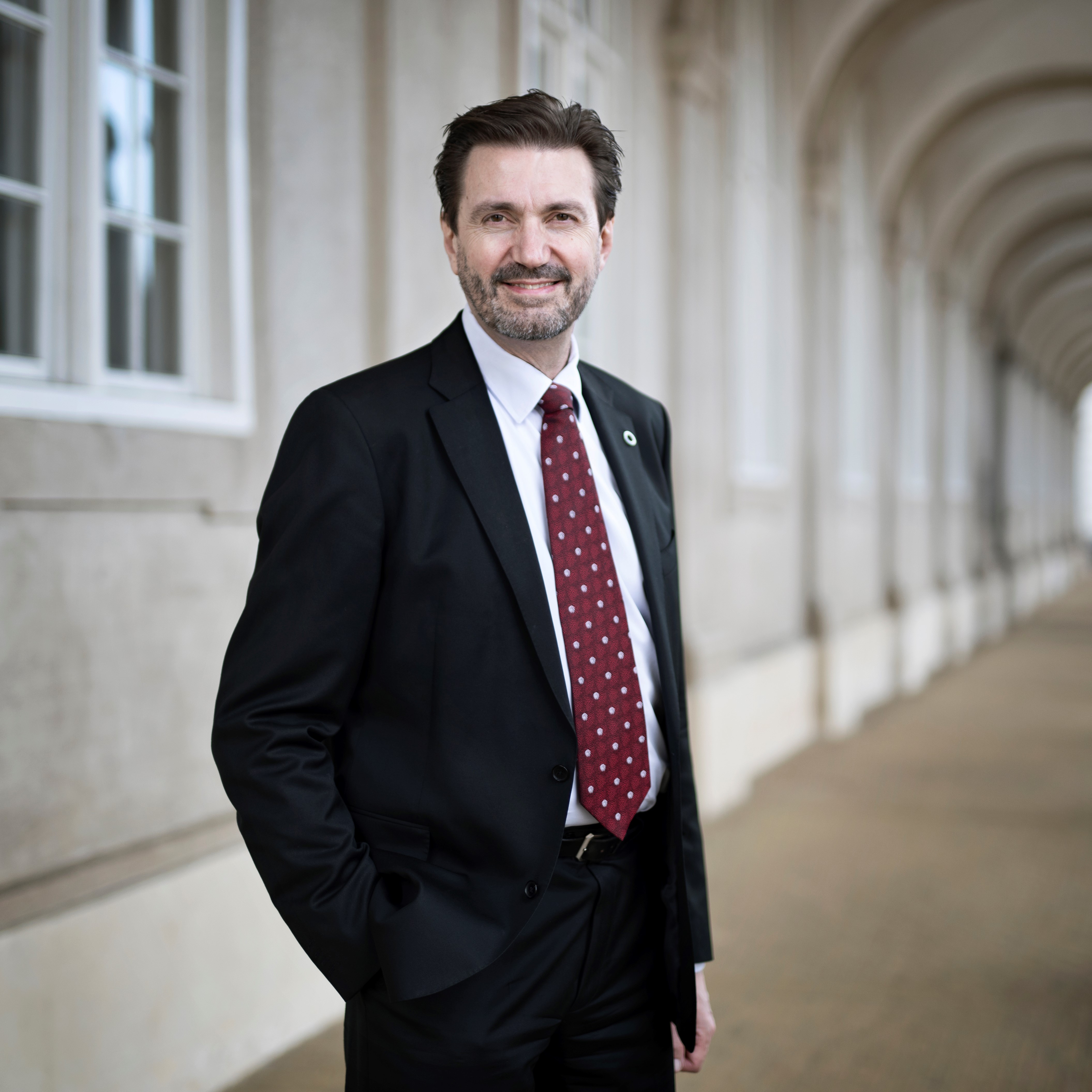
Allan Flyvbjerg, Chair of the Board at DDA, views the grant as great praise of DDA’s accomplishments so far.
“The NNF has acknowledged that our impact is significant enough to grant us funding to create something new with a wider scope. I am overjoyed about this recognition of our work, and that the NNF trusts that we will deliver. There is also a huge pride for us in knowing that we have paved the way and inspired the creation of new academies like the Danish Cardiovascular Academy (DCA) and the Danish Data Science Academy (DDSA), both also funded by NNF, and with whom we collaborate and share knowledge. Overall, this grant is a great approval for all of DDA and the future DDEA,” says Allan Flyvbjerg.
Mads Krogsgaard Thomsen, CEO of the Novo Nordisk Foundation, wrote the following on LinkedIn about DDA becoming DDEA:
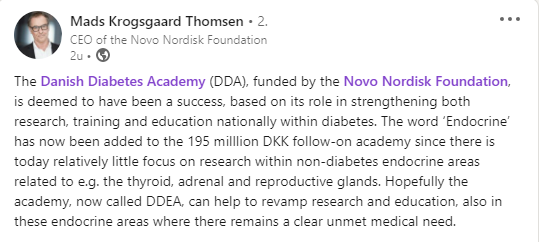
Image text: The Danish Diabetes Academy (DDA), funded by the Novo Nordisk Foundation, is deemed to have been a success, based on its role in strengthening both research, training and education nationally within diabetes. The word ‘Endocrine’ has now been added to the 195 million DKK follow-on academy since there is today relatively little focus on research within non-diabetes endocrine areas related to e.g. the thyroid, adrenal and reproductive glands. Hopefully the academy, now called DDEA, can help to revamp research and education, also in these endocrine areas where there remains a clear unmet medical need.
Collaborations and expectations
The transition to DDEA demands not just time and effort, but also vital collaborations between diabetes and the wider endocrinology fields to promote innovative, multidisciplinary, and translational research. The DDEA will establish collaborations with endocrine societies, endocrine departments at the university hospitals, the life science industry, the Steno Diabetes Centres, and basic researchers at the universities. Among others, the DDEA will be collaborating with Danish Endocrine Society and the Society for Young Endocrinologists.
Danish Endocrine Society (DES)
Pernille Hermann is chair of DES. The aim of DES is to foster theoretical and clinical endocrinology research. DES supported and helped write the application for DDEA.
“DES has looked with joy upon the strengthening of the research environments and the important research that has sprung from the various activities of the DDA,” says Pernille Hermann. “For DES, it is a priority these years to avoid a division between diabetes and endocrine research. We believe that a combined academy will be a valuable contribution to the community.”
“Another priority for us at DES is the opportunity to strengthen the recruitment and provide young, interested doctors with more opportunities. We also hope that an increased focus on clinical research can contribute to recruiting more doctors through research,” explains Pernille Hermann.
Society for Young Endocrinologists (FYEN)
Signe Frøssing is a board member at the Society for Young Endocrinologists. The aim of FYEN is to handle the interests of young endocrinologists. FYEN also supported and helped write the application for DDEA.
“Our expectations for this endeavour is that the support and opportunities for young researchers with interest in endocrinology will grow and be more varied. This, we hope, will create a positive synergy across the fields, where exchange of methods, knowledge, and collaborations will mutually strengthen the research,” says Signe Frøssing.
“We look forward to working with the DDEA. FYEN has been invited to nominate a young researcher to the DDEA Board of Directors, emphasising how close the collaboration will be. Among other things, we can provide knowledge about target audiences and communicate the opportunities to young doctors and medicine students,” says Signe Frøssing.
We look forward to strengthening diabetes and endocrinology research communities and uniting them under one roof. We hope to nurture even more talent and facilitate the foundations of success for the future voices of research within these fields.