Allocate research funding to groups, not individual scientists
And use far more criteria for evaluation. The methods used today over-simplify what it means to be a good researcher, and they undervalue the important role that teamwork now plays. 200 researchers are behind proposals for new solutions.
Research funding should be allocated to groups, not to individual scientists.
The criteria for distributing the money should recognize that high-quality research is increasingly the result of interdisciplinary teamwork.
Evaluation should be based on many more parameters than it is today, including a researcher’s supervision and public outreach skills, for example.
These are some of the proposals drawn up by a group of junior researchers and presented today in a leader in the respected scientific journal Acta Physiologica under the headline ‘Next-Generation Diabetes Researchers Shape Global Research Culture’.
The Danish Diabetes Academy encouraged the junior researchers to come up with proposals to solve some of the acknowledged problems facing the research world, and senior researchers are giving their ideas their support.
‘Among established researchers, we have a tendency to ‘carry on as usual’ and not think afresh. The proposals by these junior Danish and international diabetes researchers are super inspiring and an important contribution to shaping the research structure of the future’, says Allan Flyvbjerg, CEO of the Steno Diabetes Center Copenhagen and formerly, for six years, Dean of the Faculty of Health Science at Aarhus University.
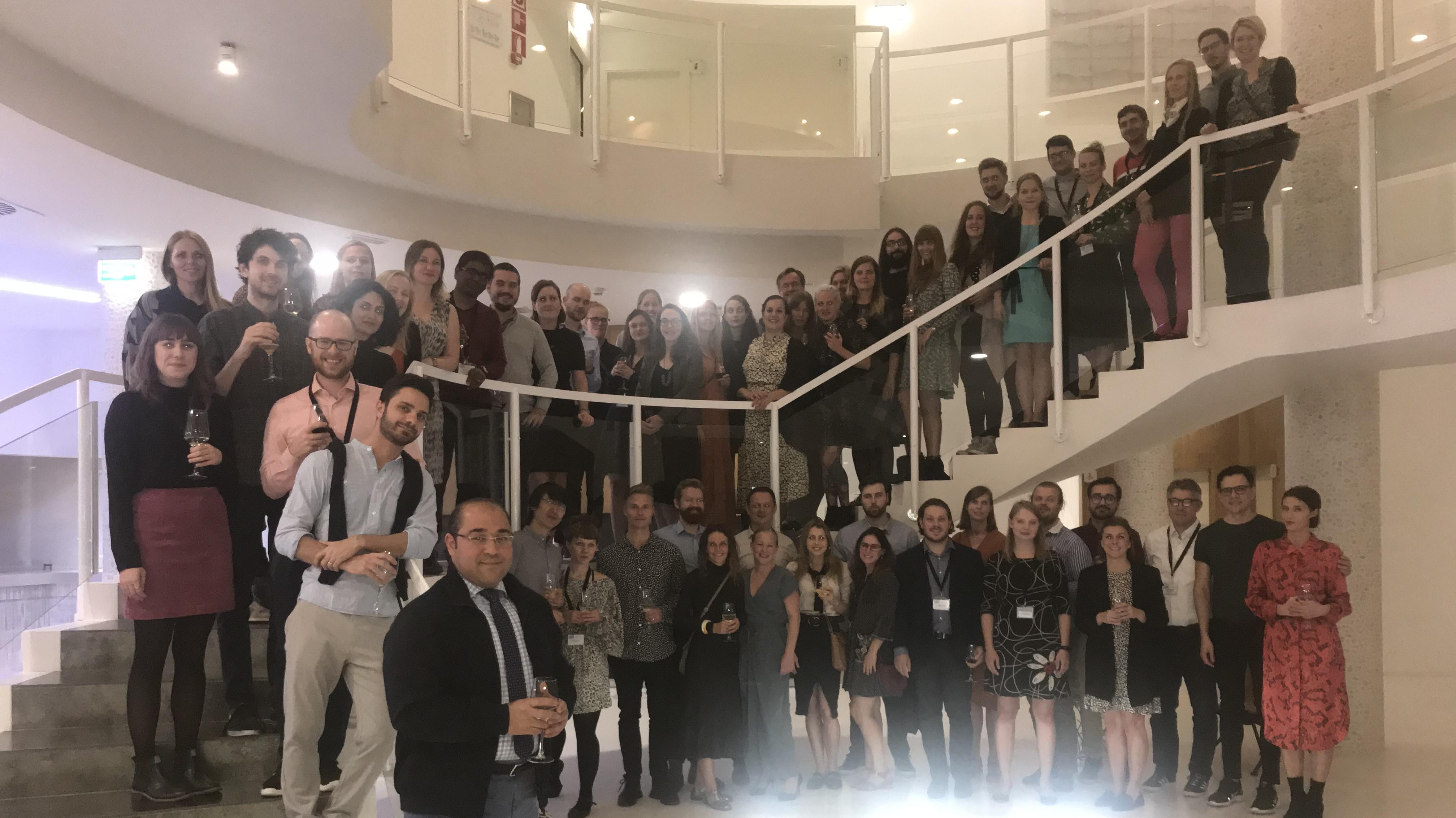
The proposals are the work of 49 junior researchers, who all requested opinions from colleagues ranging from PhD students to professor level. This means that the proposed solutions reflect input from around 200 researchers.
One concrete proposal is to award funds to research teams rather than to individuals. ‘This way, junior researchers will not be overlooked. On the contrary, they will receive recognition for their part in the project and gain a more solid foundation on which to build their further research’, says postdoc Kaja Plucinska of the University of Copenhagen, one of the organizing committee that designed the challenge.
Another suggestion is to shift the focus away from the criteria most often used at present: the number of scientific articles published by the researchers, the journals they appeared in and how successful the researchers have been in securing research funding previously.
‘That sort of assessment is problematic, because it over-simplifies what it means to be a good researcher, and it undervalues the important role that teamwork plays today’, says Sara Lind Jepsen, a postdoc at the University of Copenhagen and one of the group behind the article in Acta Physiologica.
The junior researchers' proposal is that assessment should take account of far more factors than it does today. These factors could include important professional skills in supervision, mentoring, teaching, public outreach, project management, collaboration and specialized skills such as expert knowledge of statistics, programming and experimental methods.
Enabling easier assessment of the value of work
One of the field’s most influential researchers, Professor Juleen R. Zierath, Executive Director of the Novo Nordisk Foundation Center for Basic Metabolic Research at the University of Copenhagen, agrees that new thinking is needed. ‘There is a need for better evaluation methods that incorporate a broader set of objective standards and give recognition to individual researchers working in collective research environments. The junior researchers are making an important contribution to a debate that will ultimately help the scientific community by enabling the value of its work to be assessed more easily’, she says.
FACTS
Research funding applications have a very low success rate as it is a crowded field. For example, in 2018, the success rate of applications to one of Denmark’s biggest public foundations, Independent Research Fund Denmark, was 17%, while the success rate in obtaining the full amount applied for was 14%. 71% of grant recipients were over the age of 39.
20% of grant recipients receive approximately 75-90% of competitively awarded research funds. // Analysis from Think Tank DEA and the CFA (Danish Research Analysis Centre), 2019.
The Danish Diabetes Academy aims to enhance the quality of Danish diabetes research education and to ensure that it remains at the highest international level. It is funded by the Novo Nordisk Foundation.
Acta Physiologica is an international journal dedicated to publishing high-quality original research in physiology and related life sciences. The journal publishes full-length original articles on important new observations as well as reviews and commentaries. Acta Physiologica is owned by the Scandinavian Physiological Society and is the official journal of the Federation of European Physiological Societies.
CONTACT DETAILS
Tore S. Christiansen, Managing Director, Danish Diabetes Academy // tore.christiansen@rsyd.dk // 29646764
Organizing committee responsible for preparing the work and assembling the proposals in the Acta Physiologica article:
| Maria Hauge Pedersen, Postdoc, University of Copenhagen | +1 3474014194 | |
| Sara Lind Jepsen, Postdoc, University of Copenhagen | +45 20992050 | |
| Kaja Plucinska, Postdoc, | +1 (917)624-7704 | |
| Gretchen Repasky PhD, Chief Operating Officer, DanStem, University of Copenhagen | +45 35327300 |